Building with Purpose: Ilya Iliadis and the Next Chapter for Harnest
With a career spanning property development, construction and community housing, Harnest General Manager Ilya Iliadis brings a distinctive perspective to one of Australia's most pressing challenges: delivering more homes without losing sight of the people who need them.
January 30, 2026
4
min read
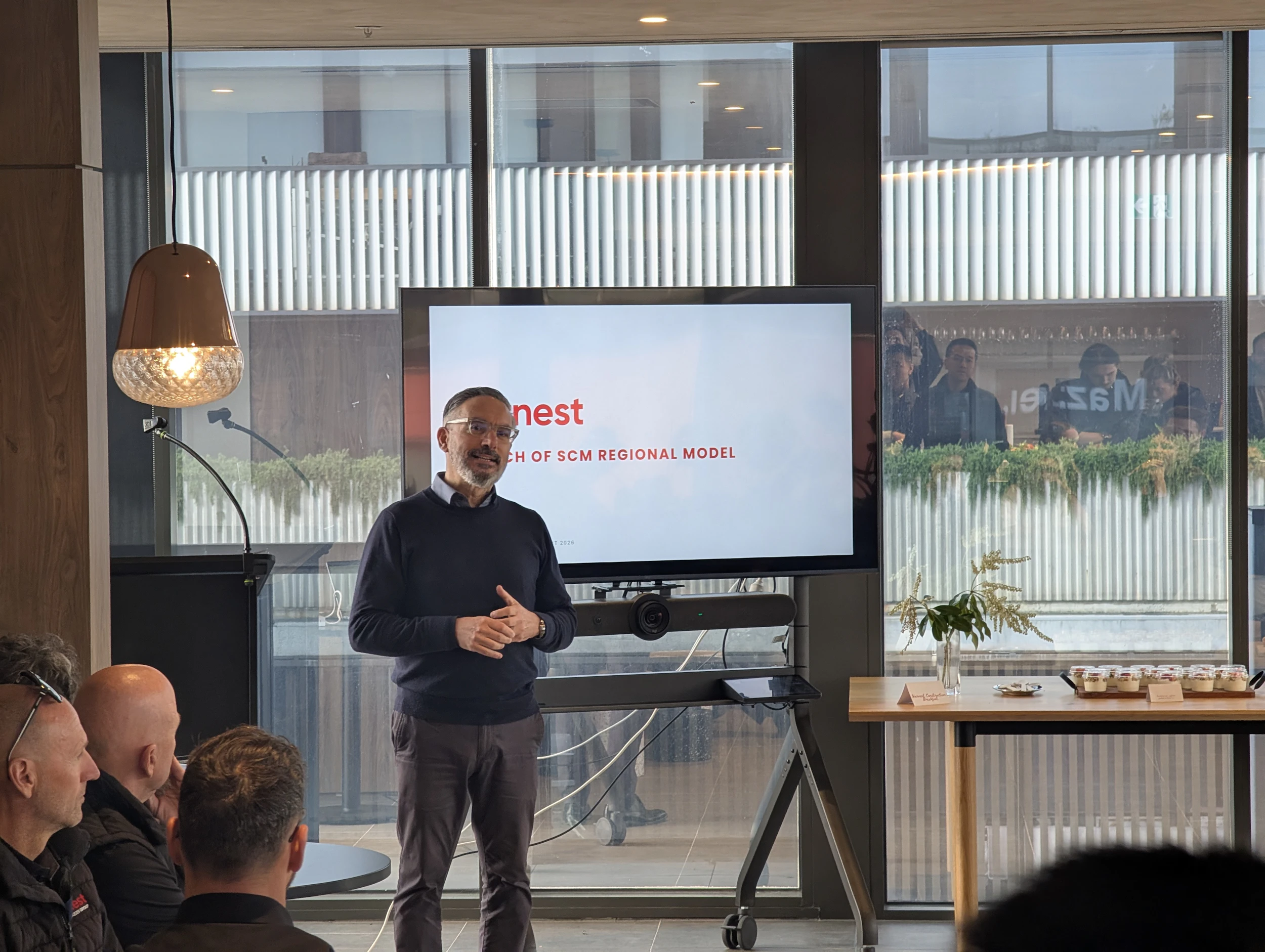
For Ilya Iliadis, successful property development has never been measured solely by the number of homes completed or the financial performance of a project. The true measure of success, he believes, lies in what those projects deliver for the people and communities they serve.
It is a philosophy shaped by a career spanning town planning, private development, major residential construction and social and affordable housing. Now, as General Manager of Harnest, part of the Mazzei Group, he is bringing those experiences together at a time when Australia's housing challenges demand both commercial sophistication and a willingness to think differently.
His appointment in late 2025 marked an important chapter for Harnest, while we are looking to expand its development opportunities and significantly increase the number of homes we delivers. At the centre of that ambition is a conviction that commercial performance and social responsibility are not competing priorities. When properly aligned, they reinforce one another.
A career shaped by both sides of development
Ilya began his career in town planning with what is now Urbis, advising on major retail and residential developments and navigating the regulatory frameworks that determine whether projects can proceed. He then moved into private development across Melbourne's inner and middle suburbs, where he honed his understanding of disciplined site acquisition, rigorous feasibility assessment and effective risk management.
His move into community housing in 2006 added another dimension. Joining Common Equity Housing Limited as government investment in affordable housing expanded, he applied private-sector expertise to an organisation with a fundamentally different measure of success: making limited capital work harder and maximising the number of people who could benefit from each investment. Over eight years, he helped deliver more than $200 million in community and affordable housing, including developments supporting older Australians, low-income households and people with complex housing needs.
As Ilya reflects, Common Equity Housing had its “heart in the right place”. His contribution was to help translate that commitment into outcomes supported by sound commercial decision-making.
One project shows what is possible. At 205 Gipps Street in Abbotsford, a 59-apartment development was structured so that 34 apartments could be sold privately, enabling the remaining 25 to be retained as debt-free social housing. It showed how private market demand could support long-term social housing assets while integrating residents from different housing backgrounds within the same development, and it became a defining influence on his approach to development and leadership.
Bringing commercial scale to social outcomes
In 2015, Ilya joined the Burbank Group, returning to large-scale private development while continuing to integrate community housing into commercially driven projects. His responsibilities included Metro Village 3175 in Dandenong, a community of approximately 1,000 homes. He later led Burbank Urban, the group's medium-density and mixed-use development and construction business, overseeing a portfolio worth approximately $300 million and contributing to corporate strategy and governance as a member of the senior executive team.
Through partnerships with community housing organisations, disability housing providers and government-supported programs, including Victoria's Big Housing Build, Build and Operate programs and Specialist Disability Accommodation, he continued to explore how private development capability could meet broader housing needs.
The experience reinforced a lesson that still informs his thinking: the housing sector cannot afford to operate in isolated commercial, government and community silos. Turning opportunities into completed homes requires all three to align around a viable development model and a clearly defined outcome.
The opportunity to make a greater difference
After decades in the industry, Ilya remains motivated by tangible outcomes. “If it’s just about delivering projects, it becomes a numbers game, and that’s not enough for me,” he says.
“I like to see outcomes. I want to know how what I’m doing is making a difference for people who are undergoing housing stress.”
Harnest’s commitment to inclusive housing aligned closely with his values, while its construction capabilities and being part of the Mazzei Group offered the chance to pursue those ambitions at greater scale. Yet he is equally clear that mission alone is not enough. “We might be the most values-focused business, but without commercial integrity and acumen, we can’t keep doing what we do.”
For Harnest, that means pairing its commitment to housing outcomes with disciplined project selection, robust feasibility analysis, effective governance and consistent delivery. Ilya sees these disciplines not as constraints on ambition, but as the foundations that make it achievable.
An ambitious agenda for Harnest
Harnest currently delivers approximately 320 homes annually, with an ambition to reach 700 a year by FY2030. For Ilya, the numbers matter because of what they represent. “Each home is a family or an individual who can be housed,” he says.
Harnest has established capabilities in Specialist Disability Accommodation and projects associated with the Homes Victoria Builders Panel, but Ilya sees considerable scope to broaden its activities. Opportunities include Harnest-led developments, joint ventures with major developers, and adjacent markets such as key worker accommodation, retirement living and land lease communities. Its regional footprint is also central, as regional communities face their own challenges in housing availability, affordability and the accommodation needs of essential workers.
The objective is not diversification for its own sake, but to apply Harnest’s expertise where commercially sustainable models can make a meaningful contribution to supply. Achieving it will mean challenging conventional approaches. “We need to think more innovatively about how we meet the need that’s out there,” he says. “We need to rattle the cage.”
Building the organisation behind the ambition
Ilya acknowledges the foundations established before his arrival, particularly the shared commitment to purpose among Harnest’s approximately 70 employees. “That sense of purpose brings a sense of urgency around outcomes,” he says. His focus is on complementing that commitment with greater technical and commercial capability, clear accountability and a culture that supports learning and sound decision-making.
He places particular value on openness. “If you don’t know something, say it. Someone will teach you, and you’ll be better for it.” He also sees the wider Mazzei Group as a source of industry experience and resources, and believes meaningful work, professional development and a supportive team make a compelling proposition for prospective employees. “It’s in our interest for you to succeed, and we’ll do everything we can to make that happen.”
Defining success beyond the balance sheet
As Harnest looks towards FY2030, its future will not be defined by growth alone. The more important question is whether that growth translates into sustainable housing outcomes, stronger communities and an organisation capable of making a lasting contribution to the sector. Ilya’s career shows that commercial development and social purpose need not sit at opposite ends of the spectrum; supported by sound strategy and thoughtful execution, each can strengthen the other.
Because behind every feasibility study, construction program and completed development is something more fundamental – the opportunity to provide someone with a place to call home.